
How long does it take to Evict a Tenant in the UK? (England Guide 2026)
Evicting a tenant in England is not a quick process. Many landlords assume it can be done in a matter of weeks, but in reality, it often takes several months and sometimes longer.
This guide explains the realistic timelines, legal process, and what can delay an eviction, so you know exactly what to expect.
In England, evicting a tenant typically takes
Around 4 to 6 months in straightforward cases
Around 6 to 12+ months if there are delays or disputes
There is no fixed timeframe, as the process depends on the legal route used, court availability, and whether the tenant leaves voluntarily.

The legal framework
Most residential evictions in England are carried out under the Housing Act 1988.
There are two main routes landlords can take
Section 21 (no-fault eviction)
Section 8 (fault-based eviction)
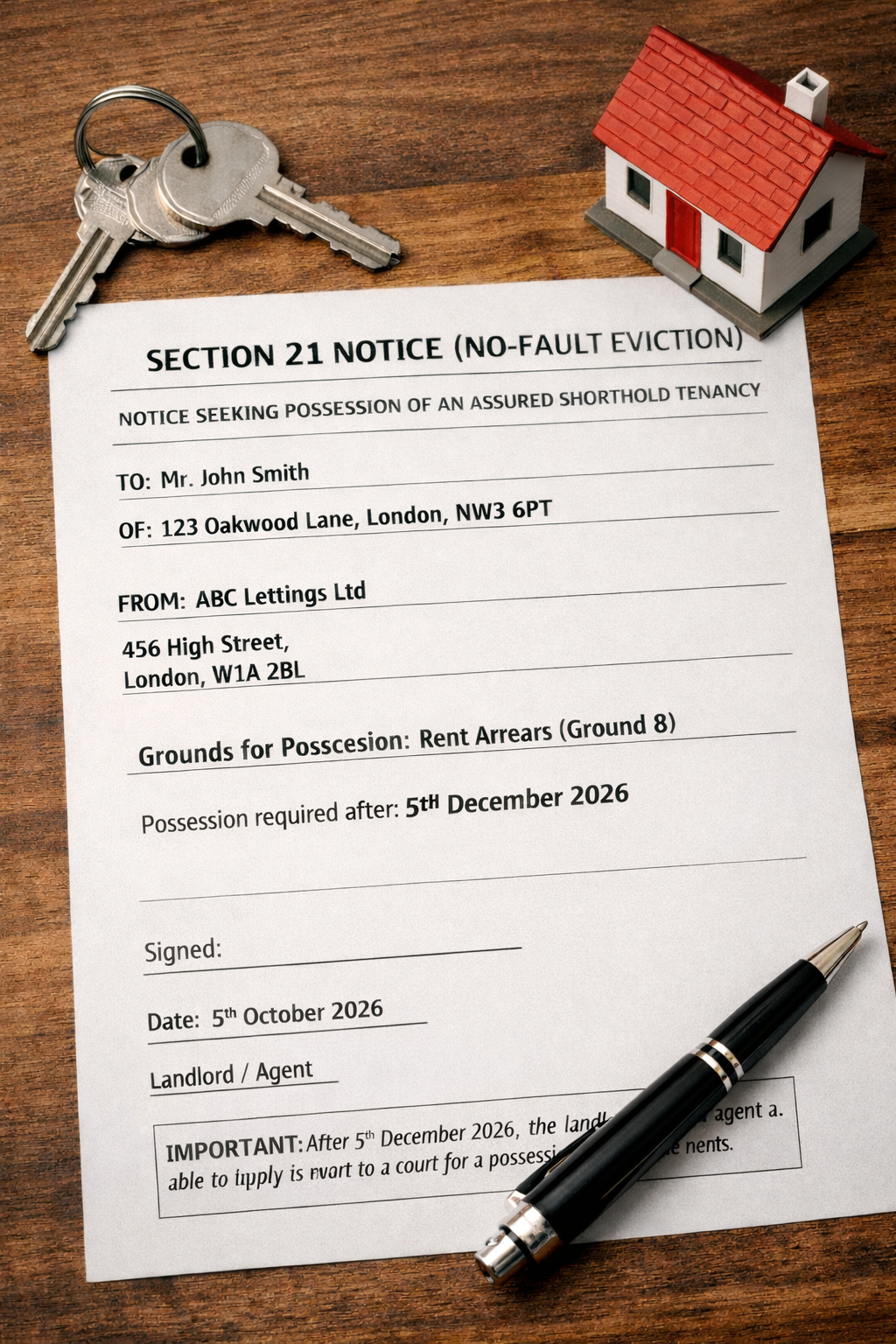
Section 21 Eviction (No-Fault)
The UK government has confirmed plans to abolish Section 21 “no-fault” evictions under the Renters Reform Bill, with the changes expected to take effect from 1 May 2026.
From this date, landlords will no longer be able to serve new Section 21 notices and will instead need to rely on Section 8, which requires a valid legal reason for possession (such as rent arrears or breach of tenancy).
Landlords should ensure they understand these changes, as they will significantly impact how possession is regained in the future.
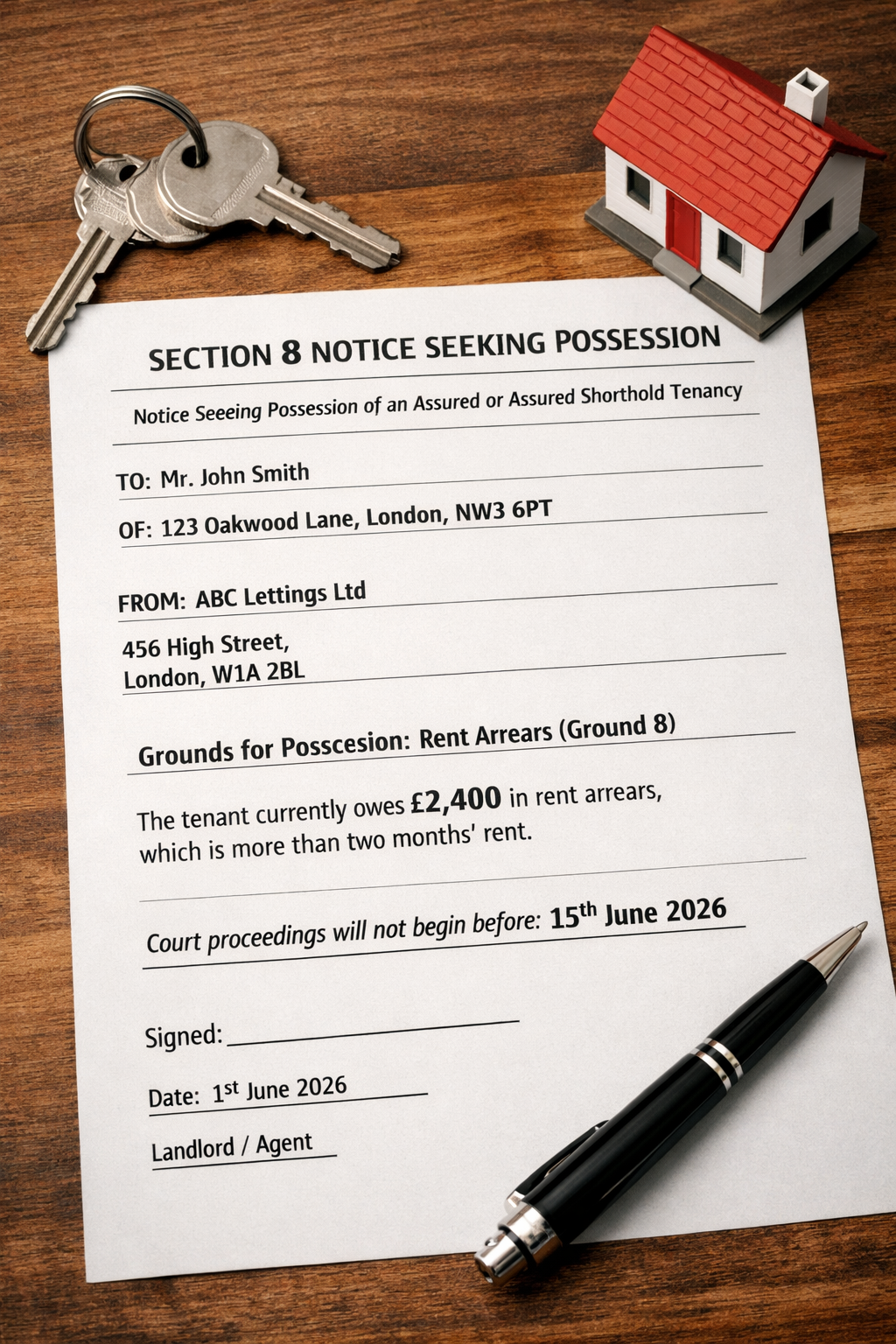
Section 8 Eviction (Fault-Based)
A Section 8 notice is used when a tenant has breached the tenancy agreement. Common reasons include
Rent arrears
Property damage
Anti-social behaviour
Notice periods
The notice period depends on the grounds used
Rent arrears (Ground 8): Minimum 2 weeks’ notice
Other grounds: can be up to 2 months
Important legal point
For rent arrears under Ground 8
The tenant must still owe at least 2 months’ rent at the court hearing
If arrears are reduced below this level, the eviction may fail or be delayed
Timeline for Section 8
Notice period: 2 weeks to 2 months
Court hearing: 6–12+ weeks
Bailiff enforcement (if required): Additional weeks or longer
Realistic total time
4 to 8+ months in typical cases

The Court process explained
If a tenant does not leave after notice expires
The landlord applies to the court for a possession order
The court reviews the case or schedules a hearing
A judge decides whether to grant possession
If the tenant still does not leave, bailiffs must be instructed
Court delays are one of the biggest factors affecting timelines.

Bailiffs and final eviction
If a tenant remains in the property after a possession order
Only certified bailiffs can legally remove them
Waiting times vary depending on court backlogs
In some cases, landlords may apply to transfer enforcement to the High Court, which can be faster but requires permission.
What landlords must not do
Landlords must follow the legal process at all times.
Under the Protection from Eviction Act 1977, it is illegal to
Change the locks without a court order
Remove a tenant’s belongings
Harass or pressure a tenant to leave
Illegal eviction is a criminal offence and can lead to fines or imprisonment.
Need help managing a tenant situation?
If you’re dealing with rent arrears or a difficult tenancy, getting professional advice early can save you months of time and unnecessary cost.
Get in touch with our team for clear, practical guidance on the best next steps.
📞 01226 391 950
📧 info@infinitusdelta.com
Get in touch with us today to discuss how we can help you make the most of the Barnsley rental market.